



بازگشت به برنامه یادگیری
How to Explore the Quran
Day 4: Translations
You might already be familiar with the Arabic language of the Quran, which we will discuss in the next section. But for many people, their familiarity is only with the letters and pronunciation, so what I will say here is very relevant and extremely crucial.
The Quran is a message sent by the Almighty to guide us. It goes without saying that this guidance only happens when we understand the message, either in its original language or with the help of translations.
“Will I be rewarded for reading the translation of the Quran?”
It is absolutely a rewardable act to read the translation of the Quran (any reliable one in any language), even though it is only a reflection of the Revealed Text. What a translation does is convey the basic meaning, and if you cannot understand the Quran without it, it becomes obligatory for you.
Quran.com
What you can do in Translation Mode on Quran.com is look together at the Arabic text of the Quran (or a transliteration, which helps you read it in Roman letters if you can’t read Arabic) and one or more translations into whichever languages you understand.
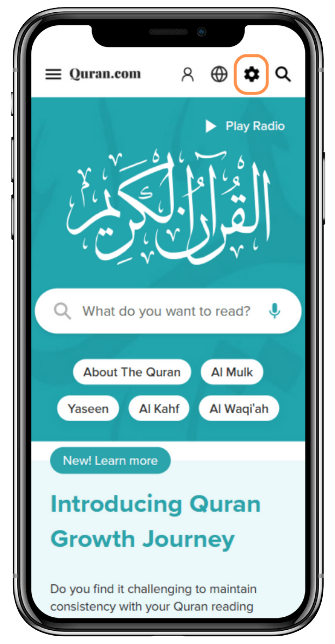
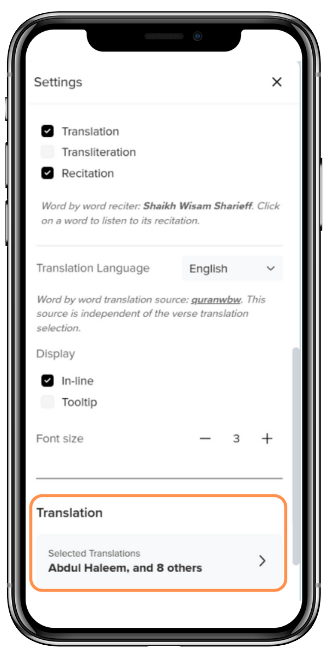
From the Settings, you can choose (in English) from some of the classic translations from early in the twentieth century or some that use more up-to-date language. Some are more literal versus those that make for smoother reading. There are some that come with detailed footnotes so you can get more context and information without having to access the Tafsir sources.
As a starting point, it makes sense to select one translation that you’re comfortable with, but you can explore further by choosing a few to compare. This will open up doors to the language of the ayah and make you wonder why the translators sometimes follow different interpretations. [Future tools at Quran.com will help answer those questions!]