Standing Bare Before Allah: The Transformative Wisdom of Hajj
The Call That Awakens the Heart
Every year, hearts begin to long for Hajj, even before pilgrims start to prepare for Hajj.
For some, this is a journey of a lifetime and an obligation they have been planning and saving funds for many years.
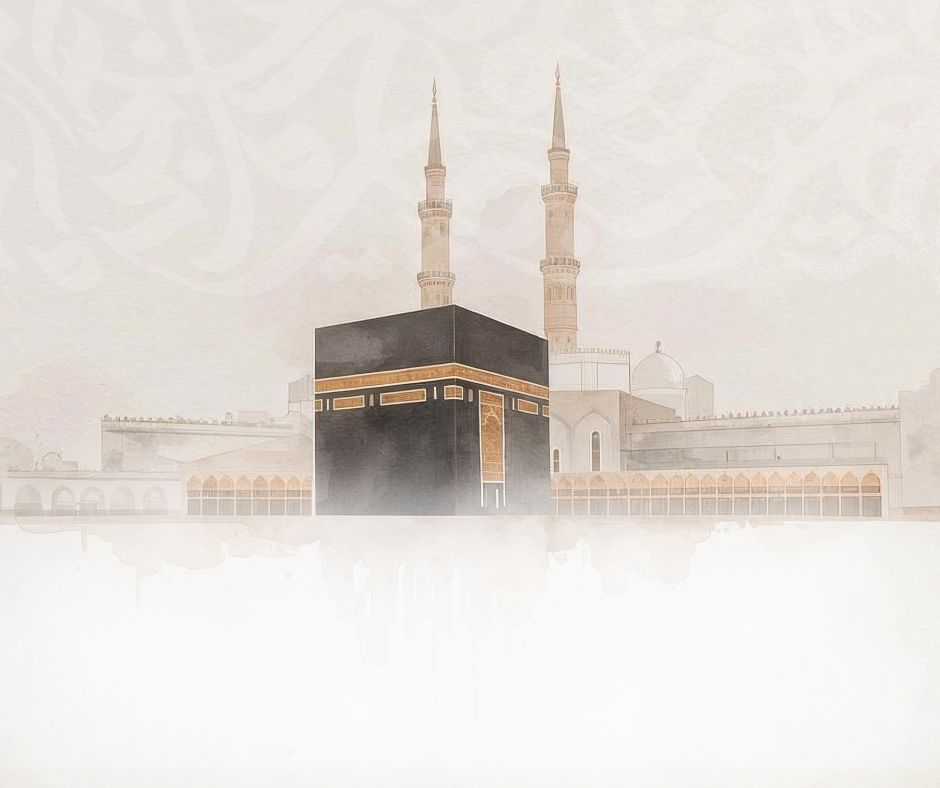
The story starts when Allah commanded Ibrahim (peace be upon him) to raise the foundations of the Ka’bah. He fully complied, and along with his son Isma’il, they together reconstructed the Ka’bah with utmost sincerity, seeking Allah’s acceptance. As they raised the foundations of the House, Ibrahim and Isma‘il عليهما السلام turned to Allah with humility, praying:
It is that historic act of obedience, servitude, and sincerity that was the true foundation before the physical.
There is a quiet pull toward the Sacred House, something felt by every Muslim – a yearning that traces back to a call made generations ago:
This call continues to reverberate through time to the ears and hearts of believers. And when a believer responds, they are not simply traveling across land. They are answering a divine invitation.
Hajj is not merely about reaching Mecca; it is about arriving with a present heart. Many perform the rituals, but few live their meanings.
Tawheed: Affirming Allah’s Oneness in Worship
Tawheed: affirming Allah’s Oneness in worship is the foundation of every step.
The true distinction is taqwa, meaning mindful righteousness and fear of Allah.
He has been reminded of the Akhirah, the Hereafter, and cannot live for the dunya, this worldly life, in the same way again.
The Ka’ba, built as a lasting monument, was established as a declaration of Tawhid and worship right from inception. Allah says in the Quran:
From the very origin of Hajj, the message is clear: purify your worship.
And so Allah commands:
The pilgrimage serves as a spiritual discipline, compelling the believer to reaffirm their devotion to the Oneness of Allah while cleansing the inner self from the spiritual maladies of vanity, arrogance, and the pursuit of worldly acclaim.
When the pilgrim repeats the Talbiyah (the declaration 'Here I am [at Your service] O God... You have no partners... To You alone is all praise and all excellence, and to You is all sovereignty'), they are renouncing all rivals to Allah.
This is why sincerity is not a detail in Hajj. It is its essence. Hajj is not for recognition. It is not for storytelling. It is not for taking endless pictures. It is for Allah alone.
When the heart is purified of all else, it becomes capable of truly saying: “You alone we worship.”
The one who reaches the Kaaba but has not purified their intention has traveled far, but has not arrived at its core destination.
Purpose of Hajj
Hajj, a journey that every capable Muslim must undertake, is more than just a physical pilgrimage. As male pilgrims enter ihram in two simple garments, and female pilgrims enter ihram in modest Islamic dress, worldly adornment and distinction are set aside. They also purify their souls from the various afflictions that trouble them. It represents a transition from distraction to devotion, from comfort to surrender, and from self to Allah.
It is no coincidence that the pilgrim is commanded to abandon adornment, wealth displays, and worldly distinctions. Wrapped in two simple garments, the human being stands as he was created: equal, dependent, and utterly in need of his Lord. This deliberate return to reality goes beyond mere symbolism.
Hajj is a school of transformation, where every movement carries a meaning, and every restriction reveals a deeper truth. For instance, when Allah SWT commands the believer to undertake Hajj, Allah gives clear instructions for Hajj. These commands are acts of worship to be performed in obedience to Him, and they also cultivate discipline, humility, and mindfulness in the believer. Allah says:
It may look like a list of prohibitions, but it is in fact a program of purification. The tongue is restrained, desires are controlled, and the ego is humbled.
Even permissible comforts are restricted: no perfume, no grooming, no marital intimacy. Why?
When Allah SWT calls the believer to Hajj, He provides distinct guidance for the journey. These mandates serve as practical rites of devotion while simultaneously fostering internal discipline, profound humility, and spiritual awareness within the heart of the traveler. The pilgrim is trained to let go of sin as well as excess comfort.
What is abandoned in Ihram is meant to awaken what has been neglected in the heart.
We learn from this, the ultimate purpose of Hajj: it is a transformative act that seeks to reinstate obedience to Allah and mindfulness of our duties towards Him, while maintaining the best conduct towards others.
Unity and Equality Before Allah
In no place is human equality more visible than in Hajj.
Millions gather, dressed the same, performing the same rituals, calling upon the same Lord.
No titles. No hierarchy. No superiority except in righteousness. The king and the layperson alike are dressed the same, are in the same rank, and perform the same rituals. It is a reminder that, at the core, the distinctions we value are not the mark of value before Allah. Neither crowns, nor labels, nor the color of our skin brings value before our Creator. The true distinction is that of Taqwa.
This moment embodies unity and serves as a life lesson.
If hearts can unite in Hajj, they were never meant to divide outside of it.
Ease Within Devotion
Despite the intensity of Hajj, Allah placed within it remarkable ease.
During the Farewell Pilgrimage, people came to the Prophet (peace be upon him), confused about the order of rituals. One said he shaved before sacrificing, another said he performed one act before another.
Each time, the Prophet (peace be upon him) responded:
“Do it, there is no harm.”
حَدَّثَنِي يَحْيَى، عَنْ مَالِكٍ، عَنِ ابْنِ شِهَابٍ، عَنْ عِيسَى بْنِ طَلْحَةَ، عَنْ عَبْدِ اللَّهِ بْنِ عَمْرِو بْنِ الْعَاصِ، أَنَّهُ قَالَ وَقَفَ رَسُولُ اللَّهِ صلى الله عليه وسلم لِلنَّاسِ بِمِنًى وَالنَّاسُ يَسْأَلُونَهُ فَجَاءَهُ رَجُلٌ فَقَالَ لَهُ يَا رَسُولَ اللَّهِ لَمْ أَشْعُرْ فَحَلَقْتُ قَبْلَ أَنْ أَنْحَرَ . فَقَالَ رَسُولُ اللَّهِ صلى الله عليه وسلم " انْحَرْ وَلاَ حَرَجَ " . ثُمَّ جَاءَهُ آخَرُ فَقَالَ يَا رَسُولَ اللَّهِ لَمْ أَشْعُرْ فَنَحَرْتُ قَبْلَ أَنْ أَرْمِيَ قَالَ " ارْمِ وَلاَ حَرَجَ " . قَالَ فَمَا سُئِلَ رَسُولُ اللَّهِ صلى الله عليه وسلم عَنْ شَىْءٍ قُدِّمَ وَلاَ أُخِّرَ إِلاَّ قَالَ " افْعَلْ وَلاَ حَرَجَ " .
Yahya related to me from Malik from Ibn Shihab from clsa ibn Talha that Abdullah ibn Amr ibn al-As said, "The Messenger of Allah, may Allah bless him and grant him peace, stopped for the people at Mina, and they questioned him and a man came and said to him, 'Messenger of Allah, I was unclear about what to do and I shaved before sacrificing,' and the Messenger of Allah, may Allah bless him and grant him peace, said, 'Sacrifice, and don't worry.' Then another came to him and said, 'Messenger of Allah, I was unclear about what to do, and I sacrificed before throwing the stones.' He advised, 'Throw, and don't worry.' "
Amr continued, saying that the Messenger of Allah, may Allah bless him and grant him peace, was not asked about anything done before or after without his saying, "Do it, and don't worry."
(Muwatta Malik Book 20, Hadith 251)
This repeated answer shows something profound. While Hajj disciplines the soul, it does not burden it beyond capacity. It is a reminder of Allah’s mercy upon this Ummah that Allah ordained for us a religion of ease.
The religion is not rigid; it is precise, yet merciful.
This balance between structure and ease reflects divine wisdom.
True devotion is guided by mercy, not crushed by hardship.
A Life Washed Clean
Among the greatest promises connected to Hajj is complete forgiveness.
قال رسول الله صلى الله عليه وسلم
مَنْ حَجَّ فَلَمْ يَرْفُثْ وَلَمْ يَفْسُقْ رَجَعَ كَيَوْمِ وَلَدَتْهُ أُمُّهُ
Whoever performs Hajj and does not commit obscenity or sin will return like the day his mother gave birth to him.
Reference: Sahih al-Bukhari 1521, Sahih Muslim 1350
Within these words lies a profound assurance of mercy for the pilgrim who undertakes the journey with a present heart, distance from transgression, and a sincere return to their Lord while rectifying their standing with fellow creation. A heart that was burdened by sin and neglect is given the opportunity to replace desires and sins with true servitude and obedience. The pilgrimage offers a sublime chance for complete forgiveness, where spiritual weights are removed, and the soul journeys back to its Lord through sincere repentance and a commitment to steadfast devotion. It is truly an opportunity for reform and self-purification.
However, it is conditional. The outward journey must be accompanied by inward discipline. The limbs must obey, and the heart must submit.
The goal of Hajj is to return purified and not merely to reach its sacred grounds.
Remembering the Journey to the Hereafter
There is something striking about the appearance of the pilgrim. The two white garments resemble a shroud. The gathering in Arafah resembles resurrection.
The message is clear: just as you have left your home with minimal belongings, one day you will leave this world with nothing but your deeds. And just as you don yourself in the simplicity of the ihram, you remind yourself of the day you will be made to wear your final garment on earth.
Standing in Arafah, millions gather with no distinction: rich and poor, powerful and weak, all raising their hands to the same Master. It is a rehearsal of the Day when all will stand before Allah, Master of the Day of Judgment. (Quran 1:4)
This is why Hajj awakens fear, hope, and urgency within the believer.
The one who reflects deeply cannot return from Hajj unchanged.
Living the Lessons Beyond Hajj
Hajj does not end when the pilgrim leaves Mecca.
If the heart tasted sincerity, it must carry it forward.
If the tongue learned restraint, it must continue.
If the soul felt its poverty before Allah, it must never forget.
If the body journeyed distances to reach the Sacred House seeking Allah’s pleasure, the heart must continue yearning for nearness to Him and the meeting with Him in the Hereafter.
One who truly benefits from Hajj returns different – more aware, more humble, more committed.
He has seen a glimpse of the Akhirah. He cannot live for the Dunya in the same way again.
A Final Dua
اللَّهُمَّ اجْعَلْ حَجَّنَا مَبْرُورًا وَسَعْيَنَا مَشْكُورًا وَذَنْبَنَا مَغْفُورًا
Allahumma aj‘al hajjana mabrooran wa sa‘yanaa mashkooran wa dhanbanaa maghfooran
O Allah, make our Hajj accepted, our efforts appreciated, and our sins forgiven.
Reference: Common supplications reported in works of dua
Reflection
If Hajj strips away everything external, what remains within your heart when all distractions are removed?